EDITOR'S PICK
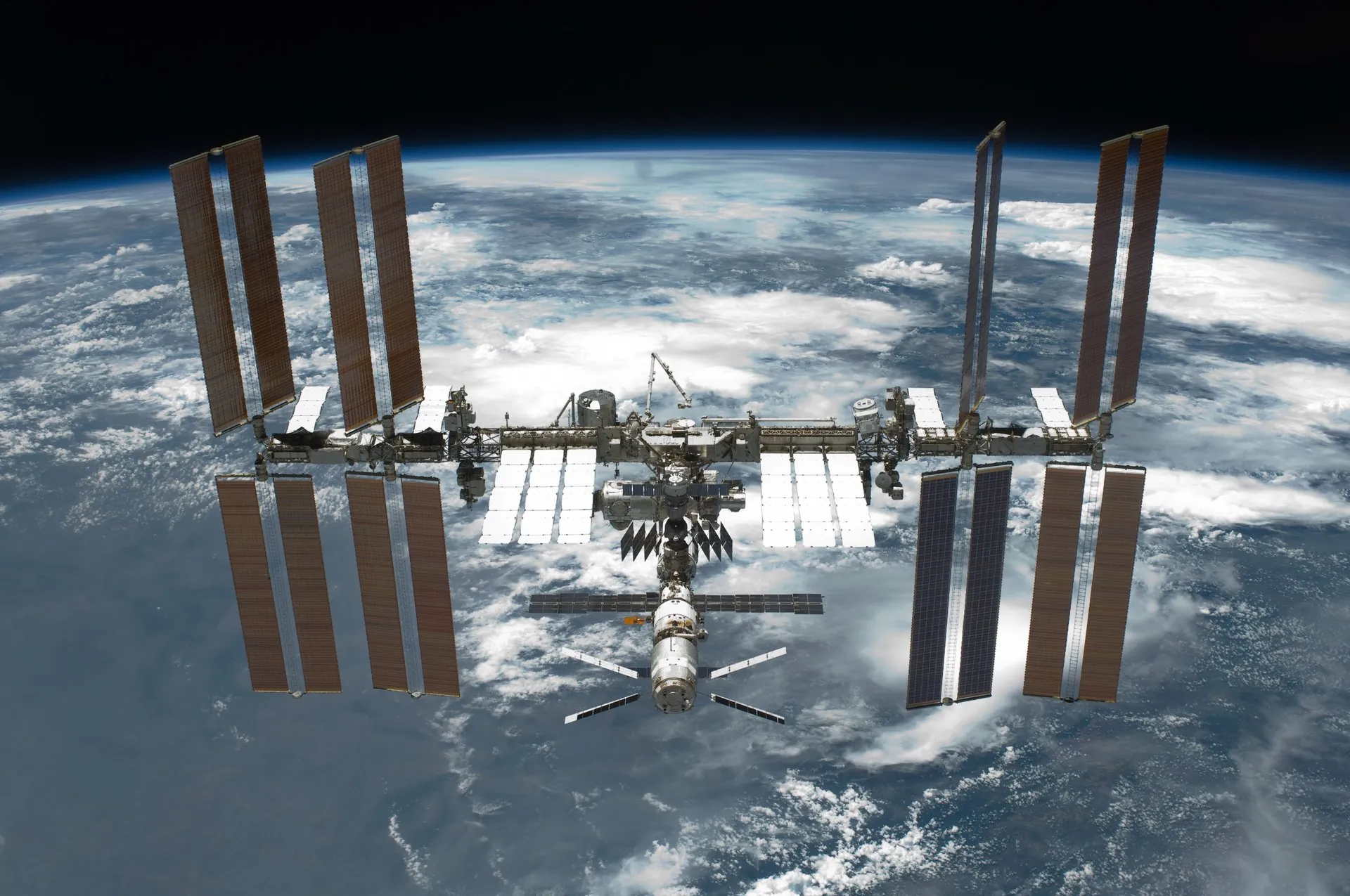
TheInternational Space Station(ISS), which has been continuously occupied for 26 years, is approaching retirement.
By 2030, all participating space agencies will bring their astronauts home for the last time, and the station will be maneuvered so it burns up in Earth's atmosphere.
The legacy of this station is unmatched, and its successors (of which several are planned) will have extremely big shoes to fill.
Nevertheless, there's no shortage of space programs and commercial interests looking to place new space stations in orbit. Some space agencies, such as NASA and the Indian Space Research Organization (ISRO), hope to deploy new stations.
At the same time, China aims to expand its existing Tiangong station to double its current size while Roscosmosrecently announcedthat it will recycle its existing ISS modules to create a space station crewed by Russian cosmonauts and international partners.
As for the commercial sector, the companies hoping to participate, and the concepts they're proposing are legion! With multiple space agencies planning on taking the "next great leap" - going back to the Moon, to Mars, and beyond - space stations are part of an incremental approach to secure those next great leaps.
And the orbital lanes in LEO could be getting a little crowded as a result. The First Stations Space stations are a means of establishing an enduring human presence in space.
First deployed at the end of the Apollo Era, they represented humanity's next step in space exploration.
Before this, NASA and the Soviet space program were locked in a state of competition - the Space Race - where they were dedicated to "getting there first." This included being the first to send a satellite (Sputnik) to space, the first man to space (Yuri Gagarin), and the first astronauts to land on the Moon (Neil Armstrong and Edwin "Buzz" Aldrin). But with the success of the Apollo missions, which landed a total of six lunar modules and twelve astronauts on the lunar surface, the Space Race was officially over.
It was at this point, during the early to mid-1970s, that NASA and the Soviets began contemplating their next moves.
Having reached space many times over, they decided to focus on technologies that would enable long-duration stays in space.
In essence, they shifted from getting to space to staying there. The Soviet Salyut-7 (left) and NASA's Skylab (right).
Credit: RKK Energia/NASA Having ceded the "Race to the Moon," the Soviets achieved an early lead with theSalyut program.
The program ran from 1971 to 1986 and launched four crewed scientific research stations and two crewed military stations that operated under the guise of the program (Almazstations).
The Salyut stations conducted research on the challenges of long-term spaceflight, as well as a variety of scientific experiments. The stations also set several spaceflight records, including mission duration, extravehicular activities (EVAs), and the first crew handover in space.
Salyut established a legacy for modular space stations and represented a critical step from single-module and docking-port stations to more complex ones.
This would be realized with the Soviet-RussianMirspace station (Russian for "peace"), which remained in operation from 1986 until it was deorbited in 2001. This station was made up of seven modules, including theSalyut-derivedMir core module, theKvant-1and-2modules (where scientific research was conducted),Kristall(microgravity manufacturing),Spektr(Earth-related studies),Priroda(Earth-sensing), and the docking module.
Mir also established a precedent for international cooperation in space through theInterkosmos,Euromir,andShuttle–Mirprograms. Meanwhile, the U.S.