EDITOR'S PICK
This is Part 1 of a series on topological defects. Every time you flip a light switch, or check the time, or feel the sodium ions wiggling in your brain — don’t think about that one too much—you’re assuming something fundamental.
You’re assuming the universe is a finished product.
A completed work.
You think the Big Bang happened, the forces of nature settled into their seats, and we’ve been cruising on a smooth, predictable ride ever since. No, the universe isn’t perfect.
In fact, its total lack of perfection is exactly why we’re here.
Long ago, like in the earliest moments of the big bang, things were a lot more even, uniform, and just kind of ok.
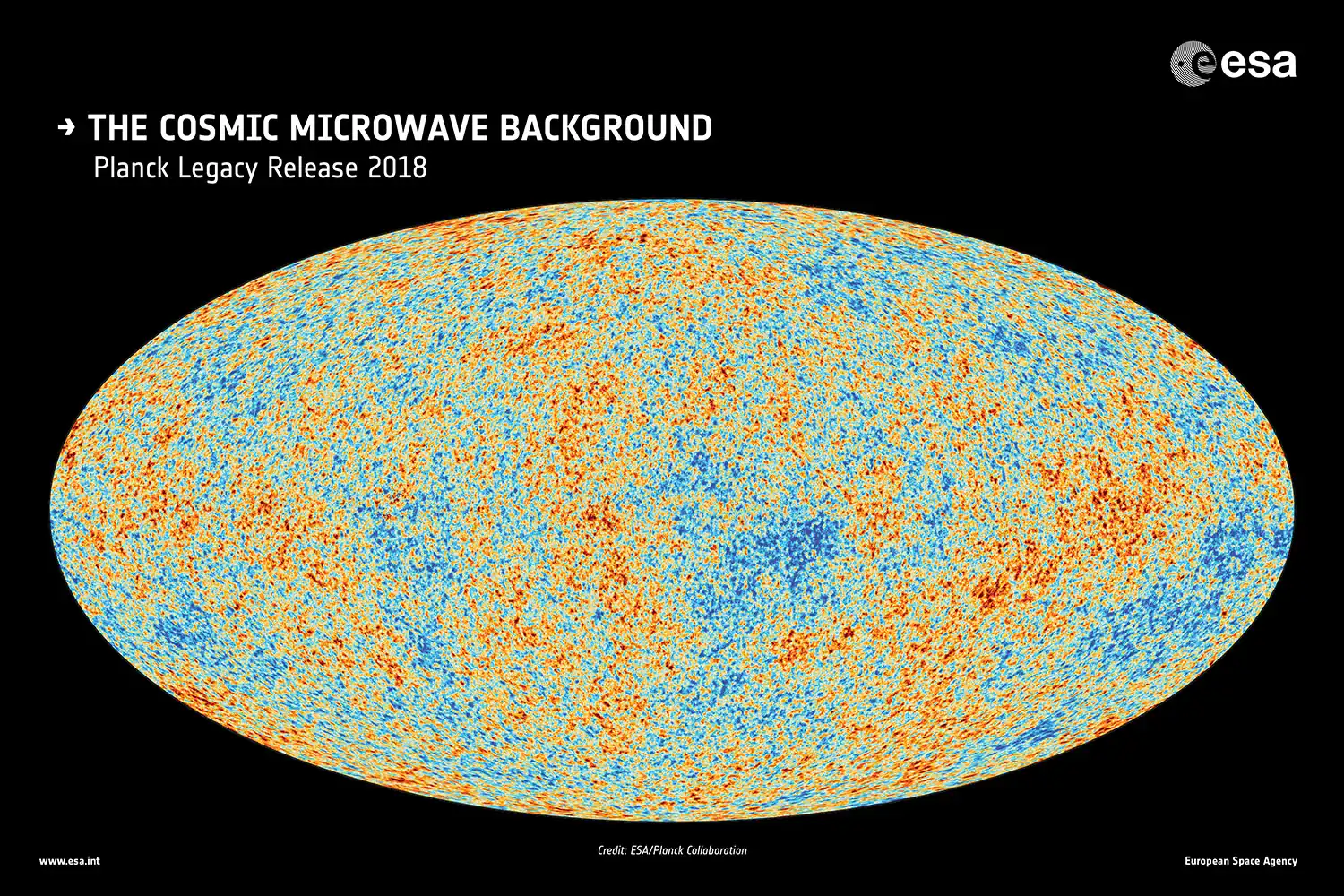
Then flaws appeared, and those flaws grew to become stars and galaxies, you and me – all the good stuff that makes this universe such a fun place to be. We have a beautiful mathematical model for how that process unfolded.
Tiny, random ripples in the quantum fields that soak all of space time grew up during inflation to become not so tiny random ripples in the quantum fields that soak all of spacetime. It’s an elegant theory.
It works.
It matches observations.
It’s the "standard" story.
But I’m not interested in the standard story today.
I’m interested in where the standard story breaks down. The thing, that process of giving flaws to the universe didn’t stop with just that.
The universe wasn’t content with JUST making a few galaxies and being done with it. Think about a lake freezing over in the dead of winter.
If the water freezes perfectly and all at once, you get a sheet of clear, black ice.
But that never happens.
Instead, you get cracks.
You get white lines where the crystals didn't quite line up.