EDITOR'S PICK
In a recent statement, Canadian Prime Minister Mark Carney announced that the federal government is investing $200 million towards Canada's first launch pad in Nova Scotia.
The site is owned byMaritime Launch Services, a Canadian commercial space company founded in 2016 and headquartered in Halifax, Nova Scotia.
This investment reflects the federal government's recently releasedDefense Industrial Strategy, issued by the Defense Industrial Agency (DIA).
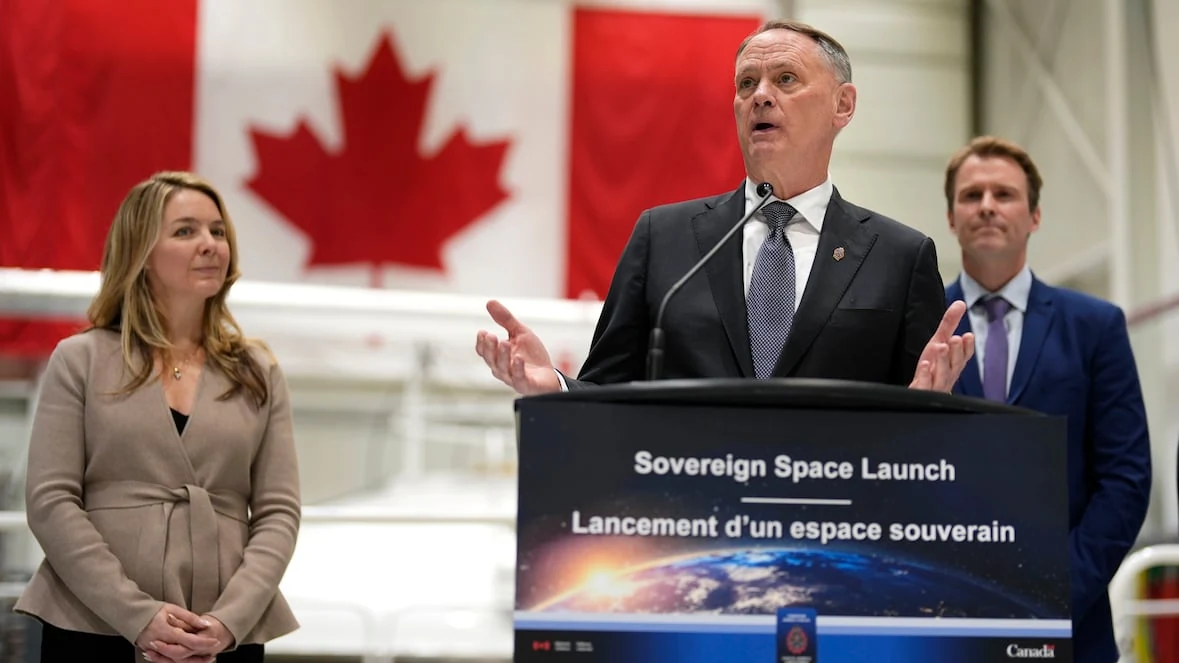
This document establishes aerospace and aerospace platforms as one of Canada's "key sovereign capabilities." The announcement was issued by Defense Minister David McGuinty onMonday, March 16th, during a press conference at the CSA David Florida Laboratory in Ottawa.
As he outlined, the $200 million will be put toward a 10-year lease on the launch pad, located near Canso, N.S., which is expected to finish construction by 2028.
Once operational, the facility will be Canada's first commercial spaceport dedicated to launching and servicing defense, science, and commercial satellites, and fostering technological innovation. "About 20 per cent of the Canadian economy relies on satellites — our banking systems, our cellphone systems, our transactions." McGuinty was quoted as saying in aCBC News story.
"So, we want to be able to give [ourselves] more sovereignty and security on that front." This is increasingly important given the growing number of commercial space companies and the dramatic increase in satellites being sent into orbit.
At the same time, more nations are building launch sites to enable domestic launch capability.
The issue of sovereignty is crucial amid ongoing supply chain issues and tensions between the current U.S.
administration and its allies, which could potentially endanger the Canadian Space Agency's (CSA) ability to launch its satellites aboard U.S.
rockets.
Sovereign launch capacity will also help prevent Canadian satellites from spending years waiting in a launch queue. Nordspace's Tundra rocket at the company launch facility in Newfoundland.
Credit: Nordspace McGuinty hinted at this in his speech, saying Ottawa does not want to be entirely dependent on third parties to launch rockets (though he didn't name names).
McGuintyalso announcedthat Canada plans to become a full member of theNATO Starliftinitiative, an Overarching Space Policy entered into by NATO allies to create a space-launch network to safeguard satellite communications against potential threats (like Russia and China). Stephen Matier, CEO of Maritime Launch Services, said that a sovereign launch capability is a big step for Canada, and the federal contract sends a strong signal to the market about the spaceport's development.
"For years, we've been taking our satellites from MDA Space or Kepler or those here in Canada and writing big cheques to SpaceX to launch them from Florida or from California," he said.
"SpaceX is selling extra space on their rockets ...
but you don't get to go where you want to go or when you want to go." Sarah Gallagher, a former CSA adviser and now the director of Western University's Institute for Earth and Space Exploration, said there are not many countries worldwide with sovereign launch capabilities: We have our own space assets in outer space, and so being able to access them immediately with resources that we have control over is quite important.
The other thing is that having a launch site actually in Nova Scotia is really advantageous.